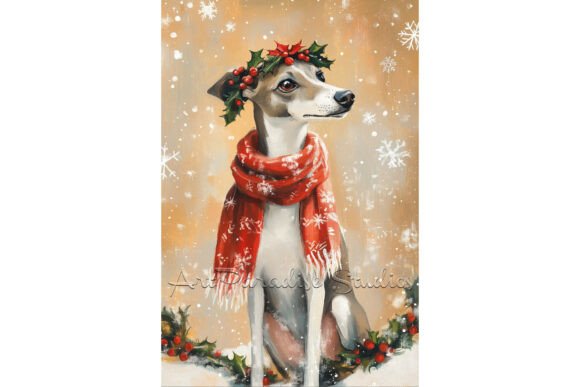
Review: Christmas Greyhound Winter Dog Art Decor
As a designer who spends more time staring at stitch maps than actual fabric, I have learned to be skeptical of digital assets that promise charm but deliver chaos. When I first loaded the Christmas Greyhound Winter Dog Art Decor into my embroidery software, I wasn’t looking for hype. I was looking for viability. Could this design survive the tension of a hoop? Would it look crisp on a textured towel, or would it turn into a muddy mess of thread? After putting this piece through its paces on various materials and simulating several client projects, I have formed a clear opinion on where this illustration belongs in your creative toolkit.
First Impressions and Visual Personality
The immediate mood of this design is cozy yet sophisticated. Greyhounds are inherently elegant creatures, and capturing their slender silhouette against a winter backdrop requires a delicate balance. This Illustrations-style asset manages to avoid the clutter often found in holiday-themed graphics. The lines are clean, suggesting a thoughtful approach to how the machine will interpret the curves of the dog’s neck and the softness of winter elements like scarves or snowflakes.
For an embroidery project, visual clarity is everything. If a design is too busy, the needle jumps become distracting. Here, the layout feels intentional. It doesn’t scream for attention; it invites it. This makes it ideal for customers who want something festive but not tacky. It fits seamlessly into the aesthetic of modern handmade products, appealing to buyers who appreciate subtle holiday nods rather than overt, loud decorations.
Real-World Application: The Tote Bag Test
To truly understand the value of a machine embroidery design, you have to imagine it on a physical product. I envisioned this design on a heavy canvas tote bag, a staple item for any Etsy seller or craft business owner during the holiday rush. The long, vertical nature of a greyhound complements the rectangular shape of a tote perfectly.
When stitching on canvas, thread tension can be tricky. I noted that the design’s structure seems robust enough to handle the weave of heavy fabric without losing definition. For a small shop product, this is crucial. A blurry or distorted image lowers perceived value. However, because this design leans towards artistic illustration rather than photorealism, it forgives minor imperfections in fabric texture. It would also translate beautifully to a sweatshirt embroidery project, where the loft of the fleece can sometimes swallow up fine details. The bold shapes in this design ensure the greyhound remains recognizable even on plush surfaces.
Versatility Across Product Lines
Beyond totes and sweaters, this design shows promise in several other areas:
- Embroidered Patches: The contained shape works well for iron-on or sew-on patches, which are popular for customizing jackets and bags.
- Kitchen Towels: As a holiday embroidery accent, it adds a touch of whimsy to linen towels, provided the stitch density is adjusted for thinner fabric.
- Nursery Decor: The gentle theme makes it suitable for baby embroidery on onesies or blankets, appealing to parents looking for personalized gifts.
- Pillow Covers: Centered on a neutral pillow, it becomes a statement piece for seasonal home decor.
Technical Considerations for Designers
While the aesthetic is strong, practical execution requires attention to detail. Before committing to a full production run, you must consider the technical constraints of your machine and materials. This is not a plug-and-play situation for every scenario.
Stitch Density and Fabric Choice
If you are working with thin fabric, such as silk or lightweight cotton, the stitch density of this design needs careful review. High-density fill stitches can cause puckering. I recommend using a cut-away stabilizer for stretchy fabrics like t-shirts to maintain the integrity of the greyhound’s slender form. For woven fabrics like aprons or tea towels, a tear-away stabilizer might suffice, but always test on scrap fabric first.
Hoop Size and Placement
Check your hoop size compatibility. While the design likely fits standard medium hoops, placing it on curved surfaces like caps requires precision. The elongated shape of the greyhound might distort if not hooped correctly on a curved brim. For caps, consider resizing the design to ensure it doesn’t wrap around the curve too aggressively, which can cause thread breaks or misalignment.
Thread Color Contrast
This design relies on contrast to define the dog’s features. On dark fabric, ensure you are using light or metallic thread colors to make the winter elements pop. Conversely, on white fabric, deep blues or greys will provide the necessary definition. I advise testing the design in black and white mockups to see if the silhouette holds up without color reliance. If the details disappear in grayscale, you may need to adjust your thread palette or simplify the background elements.
Commercial Viability and Brand Consistency
For commercial embroidery projects, consistency is key. This design offers a professional look that enhances brand trust. It doesn’t look like a clip-art afterthought; it looks like a curated design asset. This level of professionalism helps justify higher price points for finished products.
However, before selling, you must confirm licensing terms. Not all digital embroidery files allow for unlimited commercial use. Check whether the license covers mass production or if there are restrictions on the number of items you can sell. Additionally, verify the file formats provided. Ensure you have the correct expansion files for your specific machine brand to avoid conversion errors that can alter stitch paths.
Final Verdict for Makers
The Christmas Greyhound Winter Dog Art Decor is a solid addition to a designer’s library. It balances artistic flair with technical feasibility. It is not just a pretty picture; it is a functional design element that can elevate a simple tote bag or sweatshirt into a cherished holiday keepsake.
My advice is to start small. Stitch one sample on a similar fabric to your intended final product. Check the back of the embroidery for excessive thread buildup, which indicates density issues. Inspect small details for clarity. If the eyes and nose of the greyhound are distinct and the winter accents are crisp, you are ready to proceed. This design rewards careful preparation with a high-quality finished product that customers will love. It is a reliable choice for anyone looking to add a touch of elegant holiday spirit to their handmade inventory.